


Why Austrian wind farms are especially vulnerable to icing


Austria has emerged as an increasingly important wind energy market, with a growing number of turbines installed in alpine and pre-alpine regions. These areas offer strong and consistent wind resources, but they are also characterized by harsh winter conditions. While blade icing is a challenge for wind farms across Europe, Austria is uniquely affected due to the locations of its turbines, the behavior of winter weather at higher altitudes, and the high value of winter energy production.
The impact of icing goes beyond reduced technical performance. In Austria, lost megawatt-hours (MWh) translate into significantly higher financial losses than in many neighboring markets. This elevated economic exposure makes icing one of the most costly operational risks for wind farm operators in the region.
As the country approaches another winter season, operators are increasingly evaluating icing not only as a performance issue, but as a critical factor affecting overall profitability.
High-altitude siting brings persistent icing exposure
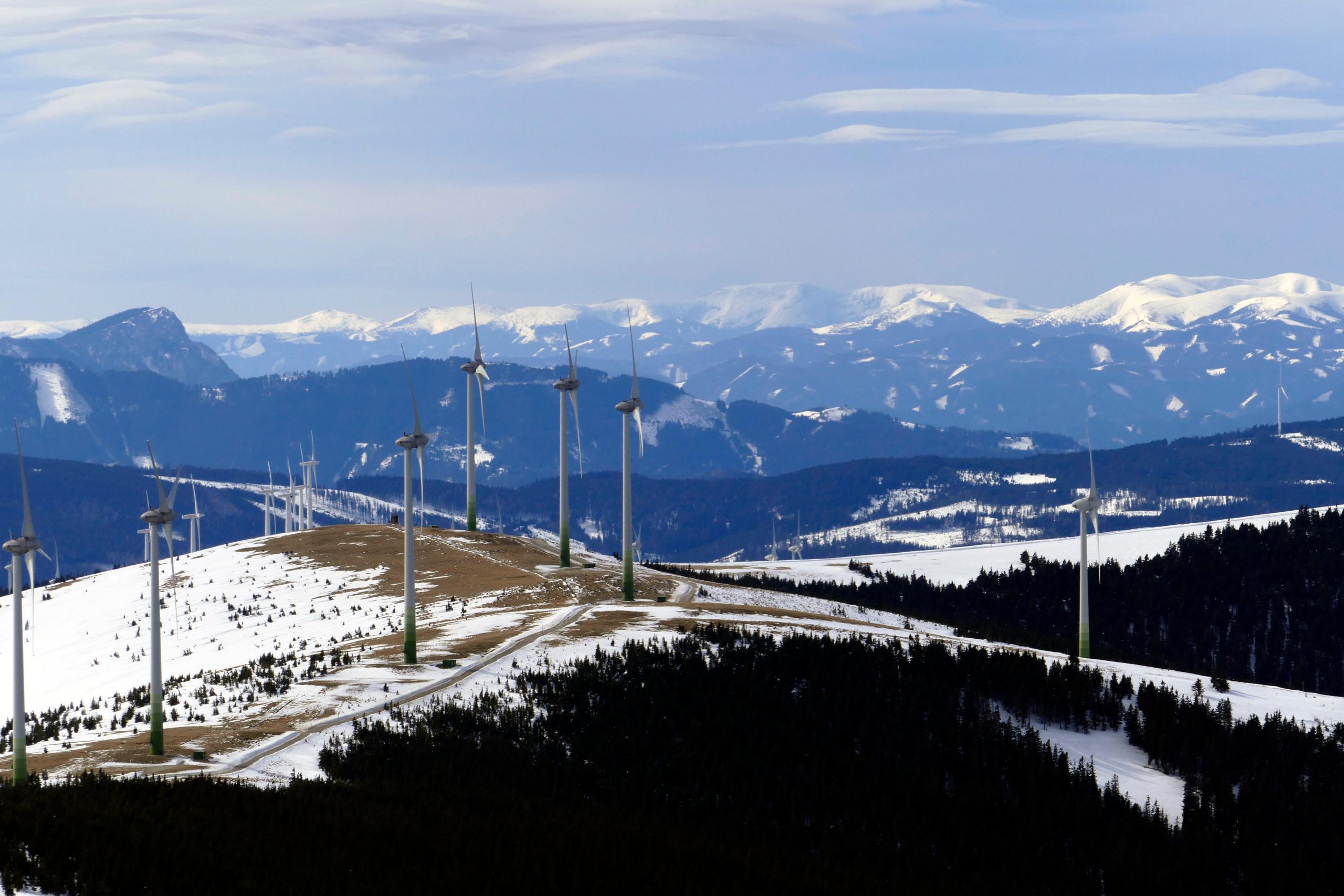
A notable portion of Austria’s wind turbines operate at elevations between 1,000 and 1,600 meters. These sites offer strong wind resources, but they also place turbines directly in the path of alpine winter weather.
At these elevations, temperatures often fluctuate around the freezing point, sometimes crossing it several times in a single day. Moisture levels remain high, and low-lying cloud banks frequently settle along ridgelines, enveloping turbines for extended periods.
These conditions create a near-constant exposure to in-cloud icing, where supercooled water droplets freeze onto blade surfaces during operation. Unlike rime ice formed during brief cold snaps, in-cloud icing can persist for hours or even days, accumulating gradually and often without obvious visual cues.
Alpine weather creates ideal conditions for ice formation
Austria’s alpine climate presents a combination of icing mechanisms that are particularly difficult to manage.
In-cloud icing remains the dominant challenge during winter months, especially at higher elevations where turbines operate inside moisture-laden cloud layers for long periods. In addition, wet snow accretion – heavy, adhesive snow that sticks to blade surfaces – can occur during transitional weather events.
As wind speeds increase, this snow can compact and harden into dense, uneven ice formations along the leading edges of blades. The result is reduced aerodynamic performance, rotor imbalance, and increased vibration loads.
In many cases, these losses develop gradually, making them harder to detect through standard monitoring systems until availability or power output has already been impacted.
Why icing carries higher economic consequences in Austria
While icing is a well-documented technical challenge, the financial context in Austria makes the problem far more acute.
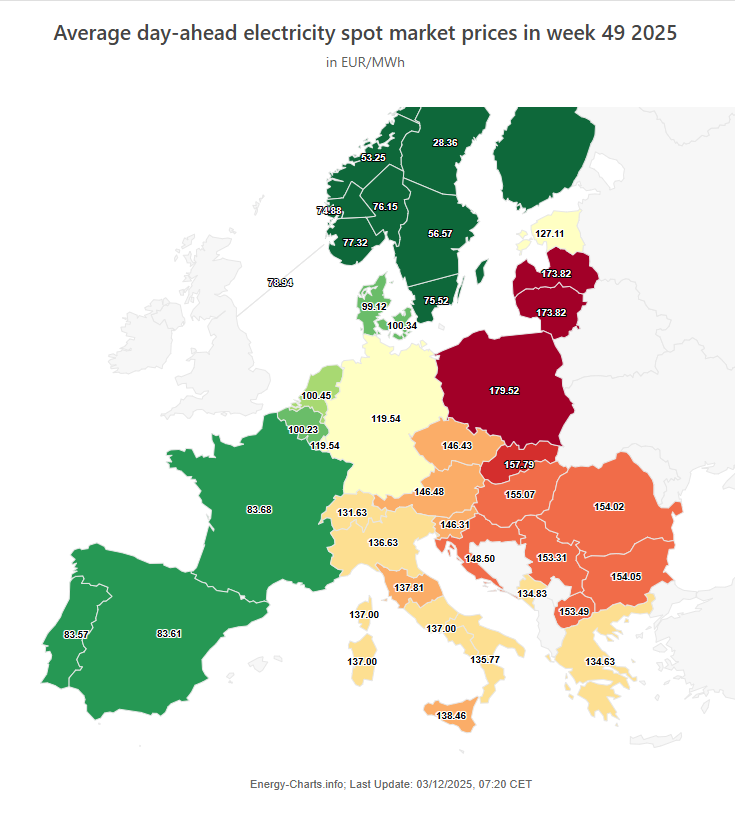
Electricity prices in Austria often sit noticeably above those in many European markets. Even in shoulder seasons, months when icing is minimal, Austria’s day-ahead market tends to trade in a higher price band than countries across Western and Northern Europe.
This premium pricing creates a unique dynamic: every lost MWh costs more in Austria than it does in most competing wind markets.
For wind farms with exposure to market-based revenues, winter icing doesn’t just reduce output. It erodes value at a time when electricity is often most in demand.
Image source: Exchange electricity prices – Map | Energy-Charts
Early-season icing can appear as soon as late autumn, and events can persist well into March or April, depending on elevation.
This extended season magnifies the impact. Every additional hour of icing not only cuts into potential production, but also limits the ability to restart turbines quickly after storms.
Why standard cold-climate solutions reach their limits
Many turbines in Austria are equipped with factory-installed cold-climate packages. These typically include component heaters, low-temperature lubricants, insulated enclosures, and in some cases blade coatings designed to delay initial ice adhesion.
While these measures help ensure that turbine components remain functional in cold weather, they are fundamentally passive in nature. They do not actively remove ice once it forms, nor can they counter prolonged exposure to moisture-heavy, near-freezing conditions typical of alpine sites.
As a result, even well-equipped turbines can experience extended downtime, ongoing aerodynamic losses, and repeated imbalance-related stress throughout the winter season.
A growing focus on active ice protection in alpine environments
These combined environmental, safety, and economic pressures are leading more Austrian operators to evaluate active blade heating solutions designed specifically for persistent icing environments.
Unlike passive measures, active ice protection systems apply controlled, uniform heat from within the blade, preventing ice buildup during operation and enabling faster recovery after icing events.
In alpine conditions, such systems have demonstrated advantages including:
- Higher winter availability during prolonged in-cloud icing
- Reduced need for extended shutdowns due to ice accumulation
- Faster return to production following storms
- More stable aerodynamic performance throughout winter
- Lower mechanical stress from improved rotor balance
For operators managing high-altitude assets in safety-sensitive environments, these benefits translate into more reliable winter operation and improved capture of high-value megawatt-hours.
Experience matters where icing is the baseline, not the exception
In regions like Austria’s alpine wind corridors, icing is not an occasional anomaly – it is a defining operating condition. Solutions that perform well in mild or intermittent icing often fall short when exposure is continuous and conditions change rapidly.
As Austria continues to expand and optimize its wind fleet, operators are increasingly looking toward technologies and operating experience drawn from other cold-climate, high-icing regions, where in-cloud icing and winter availability have long been part of everyday operation.
In those environments, keeping turbines turning safely through winter is not just a technical challenge – it is a prerequisite for long-term performance and profitability.